 Cushions by Use
 Design
 Guides
 Sample Bag
 My Orders
How to Measure a Cushion
for a Custom Cover
A few simple measurements and we cut & sew a cover that fits perfectly. Here's exactly how to take them — new furniture or replacing an old cushion.
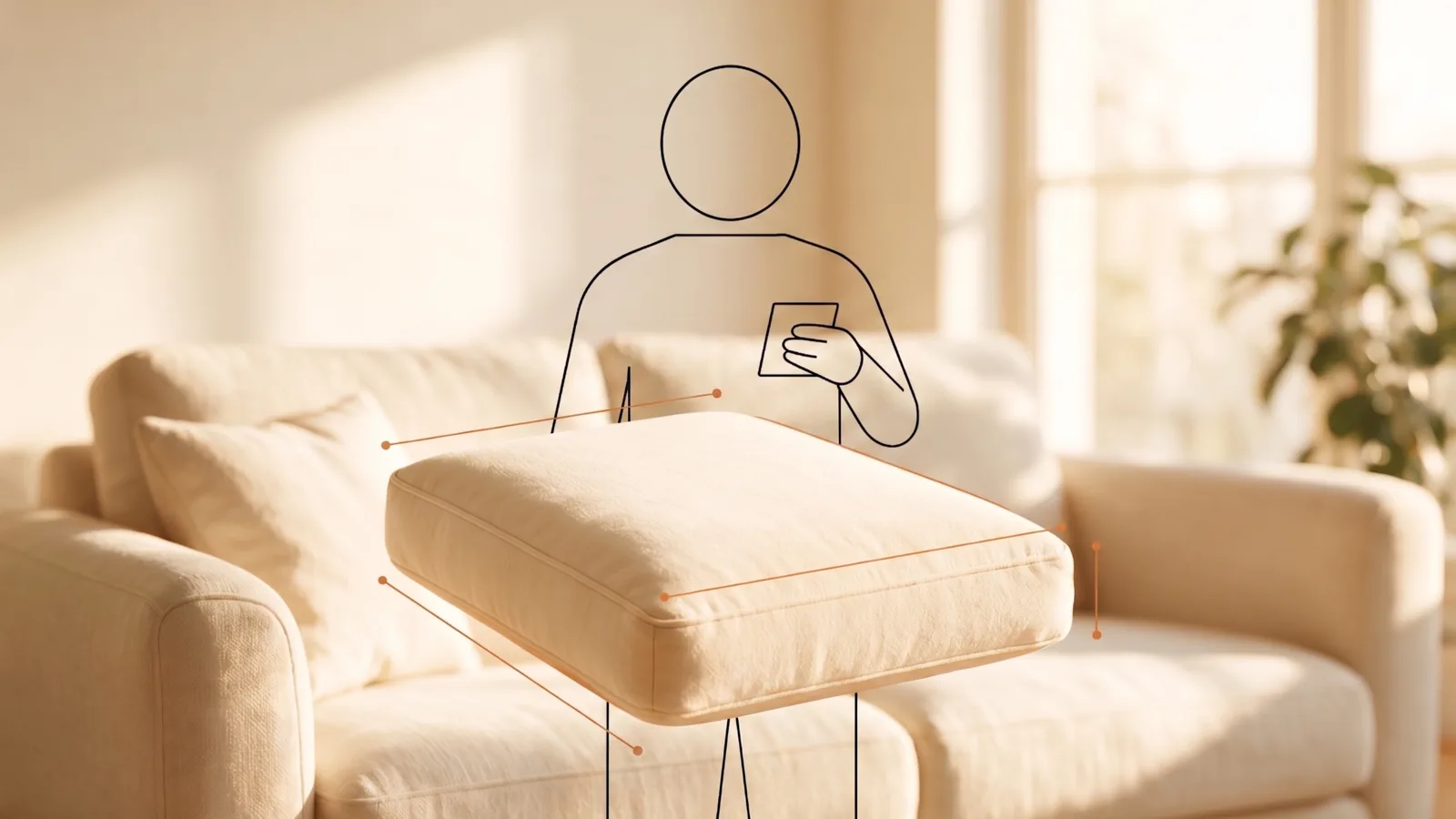
Two Cases, Two Methods
How you measure depends on what you're making.
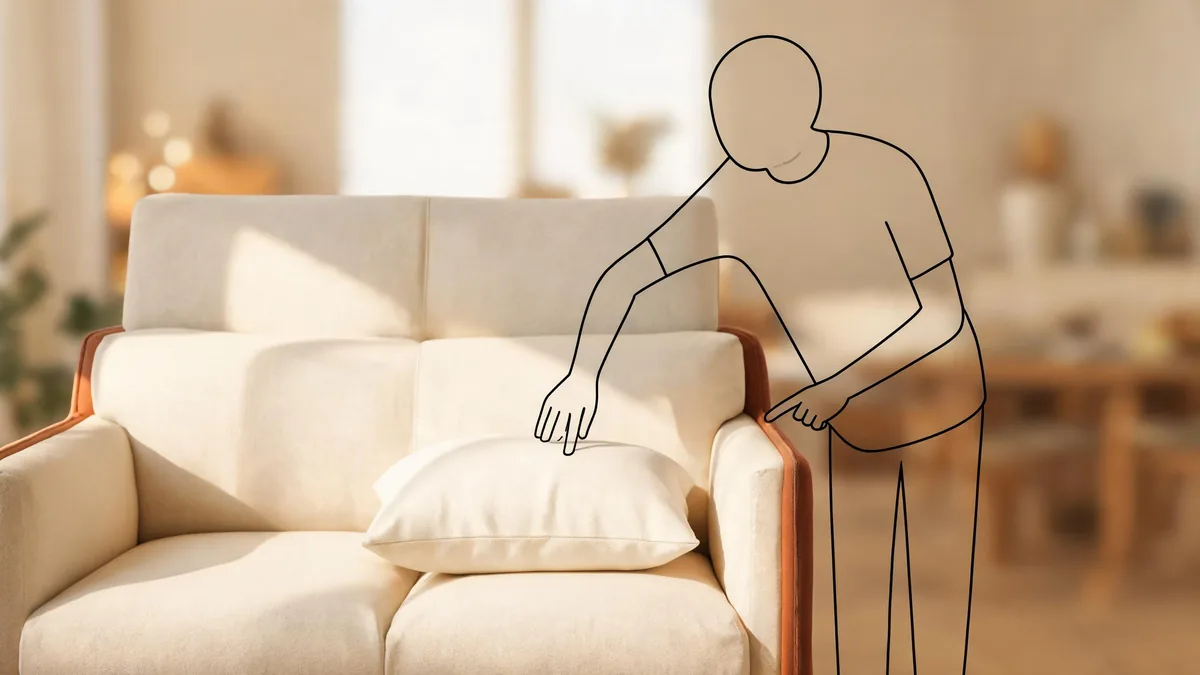
Brand-new cushion
For an empty sofa, bench or window seat — measure the frame, inside to inside.
- Frame: measure the inner width and depth between the arms or walls.
- No frame (bench): just measure edge to edge across the seat.
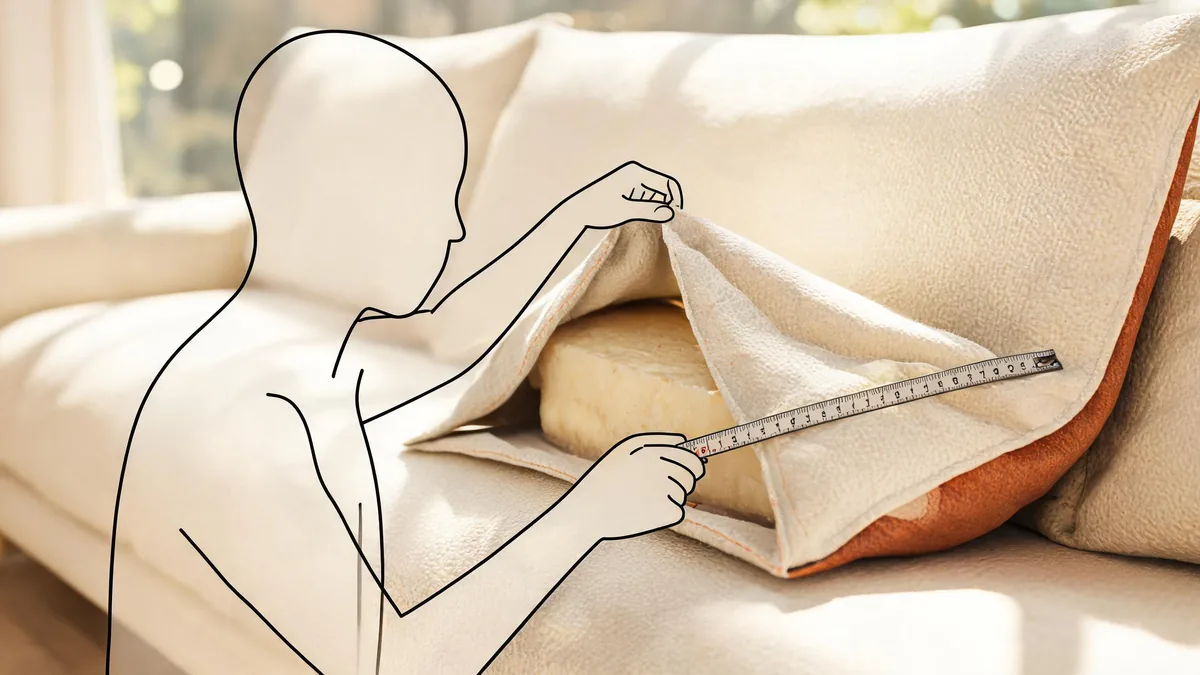
Replacing an old cushion
Don't measure the foam — it sags and gives a wrong number. Measure the cover, seam to seam, with a gentle pull.
- Foam + cover: prefer the frame.
- Cover only: take 10mm off the thickness.
Golden rule: better big than small
A soft cover can be compressed to fit — a big one squeezes in and can be adjusted. A small one can't grow. Measure the real size and don't stress about it.
The 60-Second Version
Three numbers, seam to seam. That's it.
Width
Left to right, across the cushion, seam to seam.
Depth
Front to back, seam to seam.
Thickness
Top to bottom at the thickest point, seam to seam.
Step by Step
Take your time — accurate measurements make a perfect fit.
Lay the cover flat
Pull the existing cover off and lay it flat on a clean surface. Smooth out wrinkles. If there's piping, measure between the piping — not over it, or the cover will be too big.
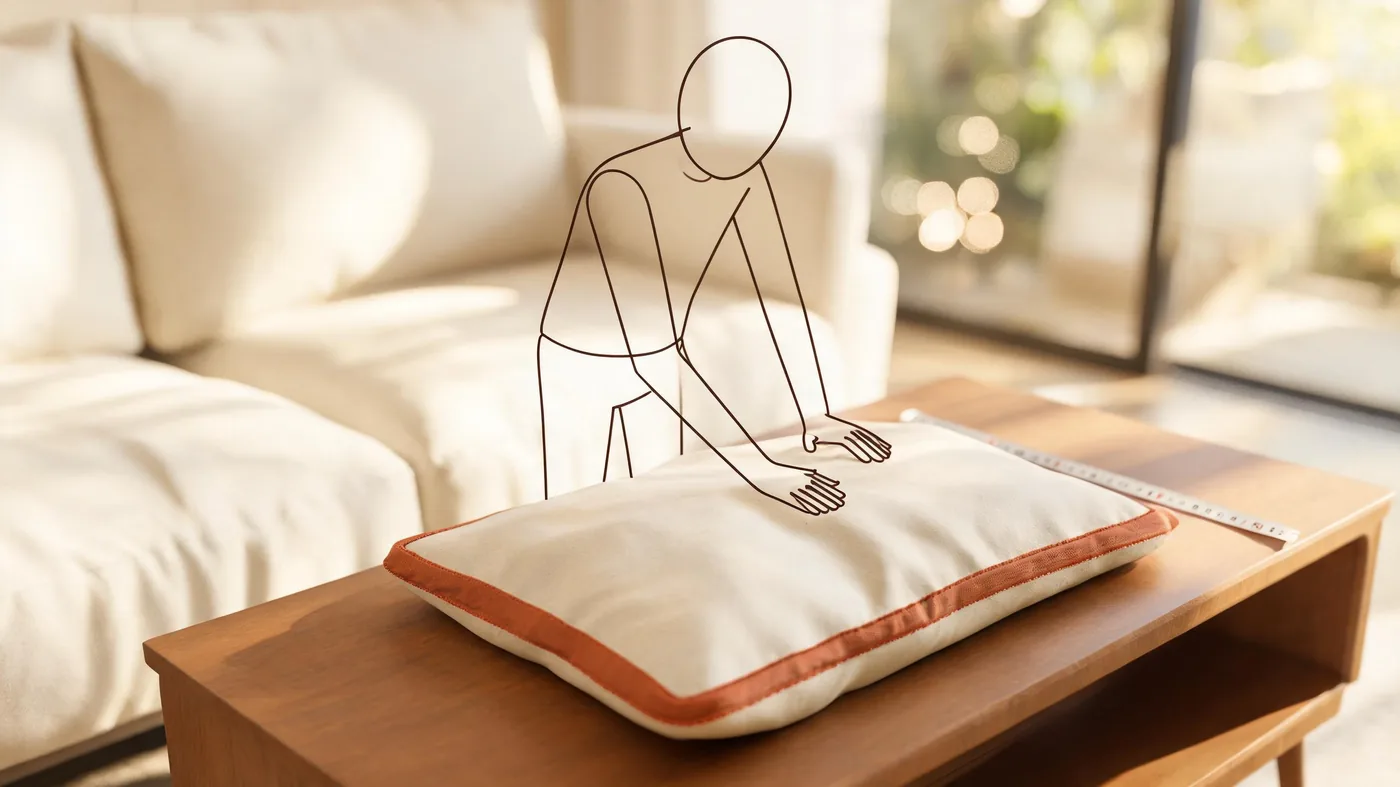
Measure the width
Find the widest side — that's your width. Put the metal end of your tape inside the piping, and measure corner to corner, seam to seam.
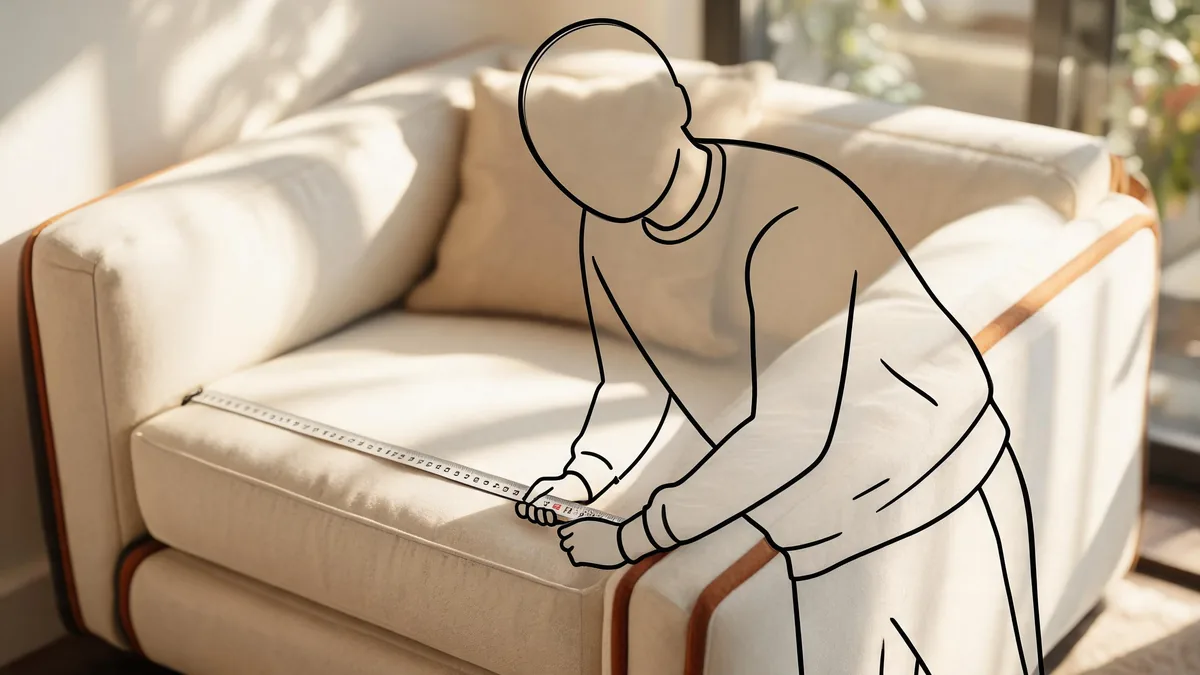
Measure the depth
Now measure front edge to back edge — this is the depth. If the cushion has a rounded or sloped back, measure the widest straight part.
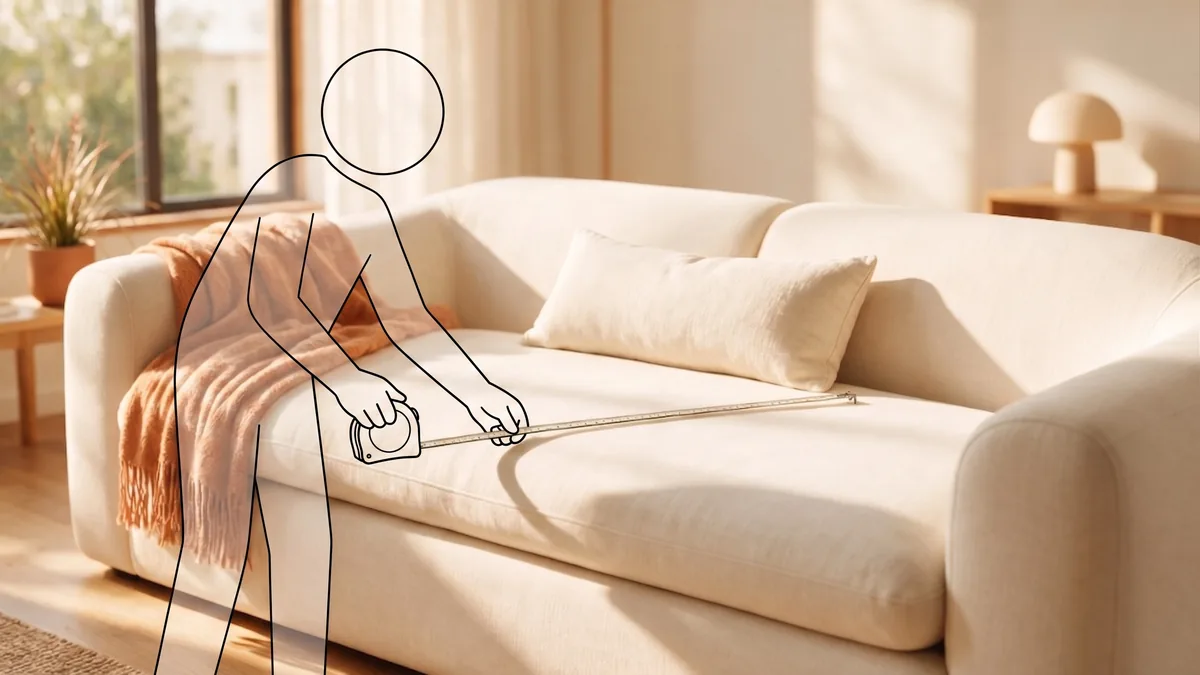
Measure the thickness
Measure top to bottom at the thickest point, seam to seam. For piped covers, keep the tape between the piping.
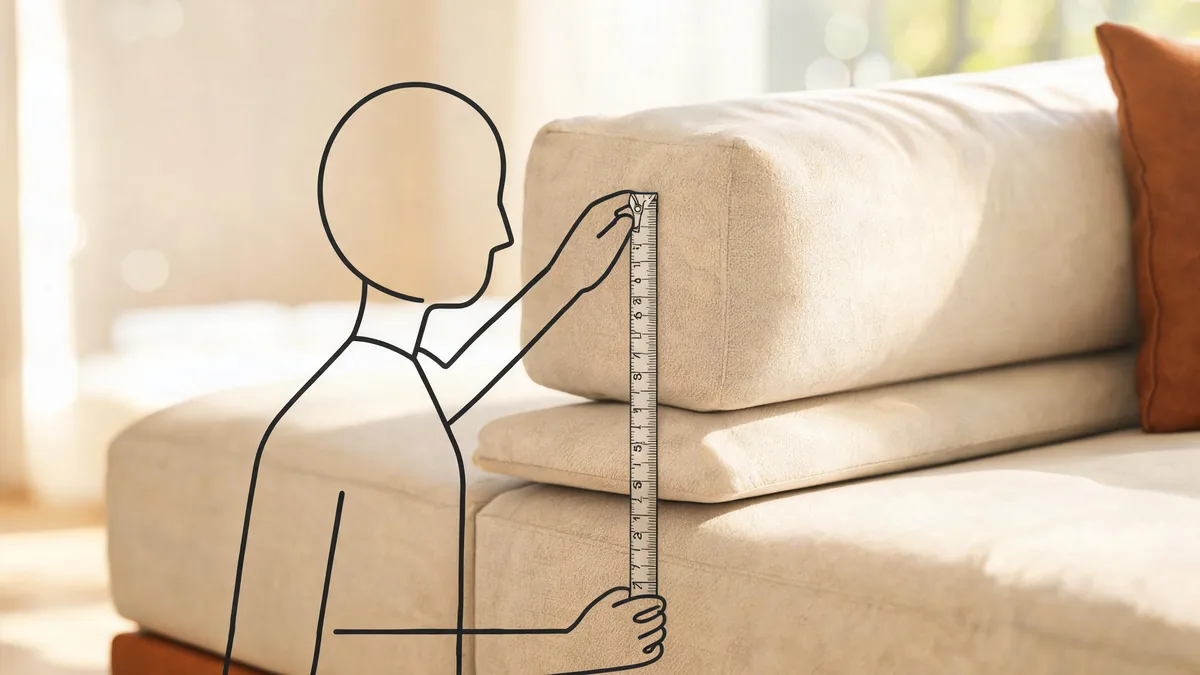
Order in the designer
Enter your three numbers, pick your shape and fabric — we do the rest.
Measuring by Shape
Different cushions need slightly different measurements.
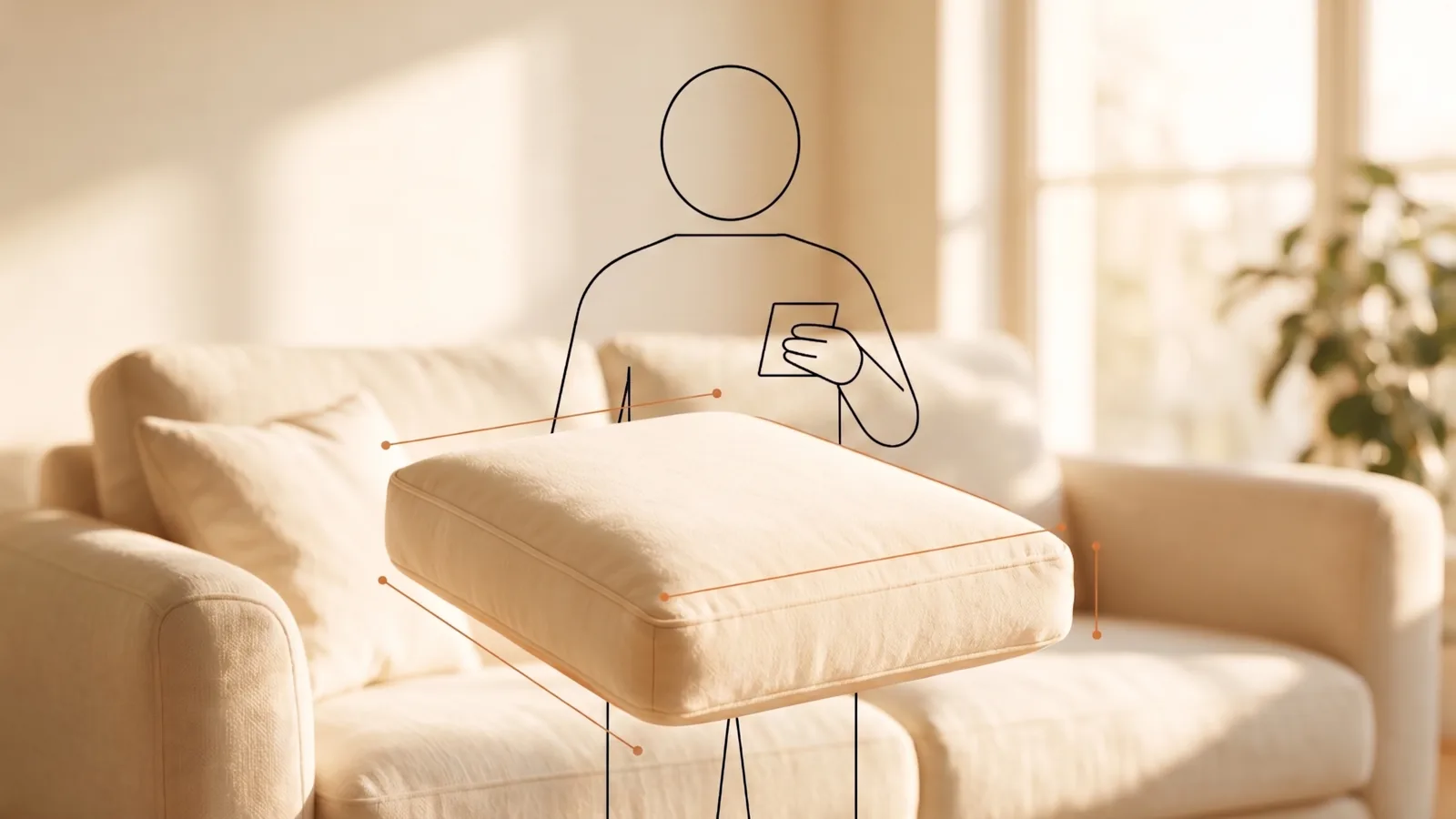
Rectangle
Width, depth and thickness as above.
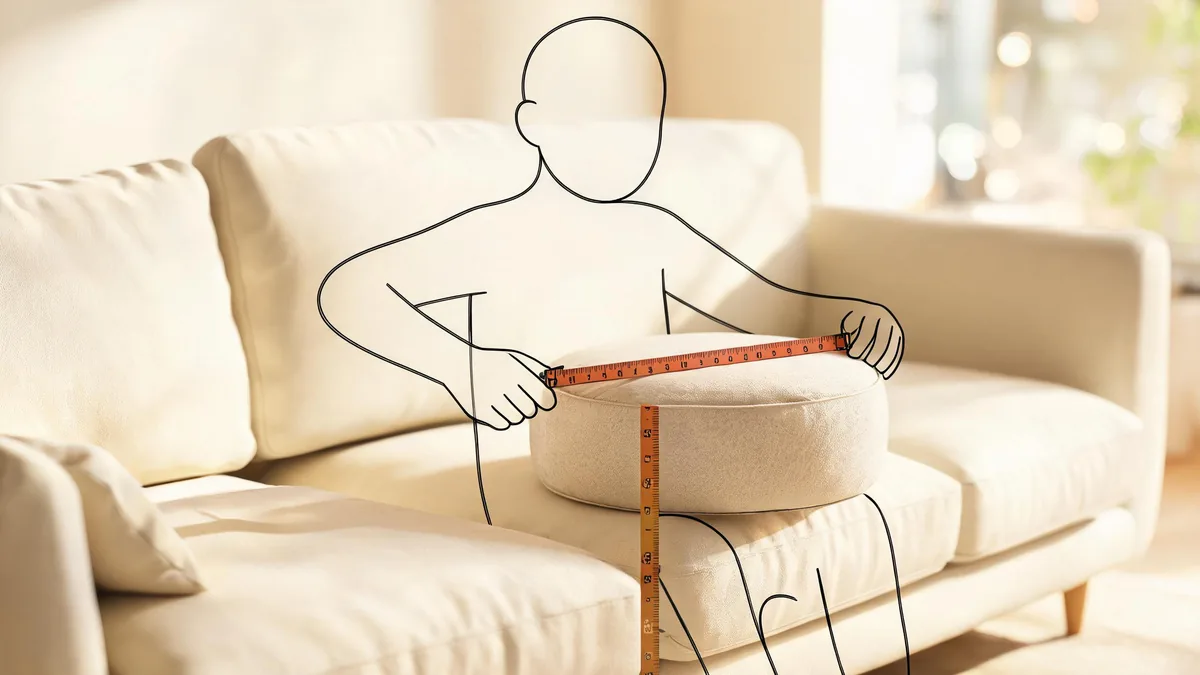
Circle
Diameter at the widest point, plus thickness.
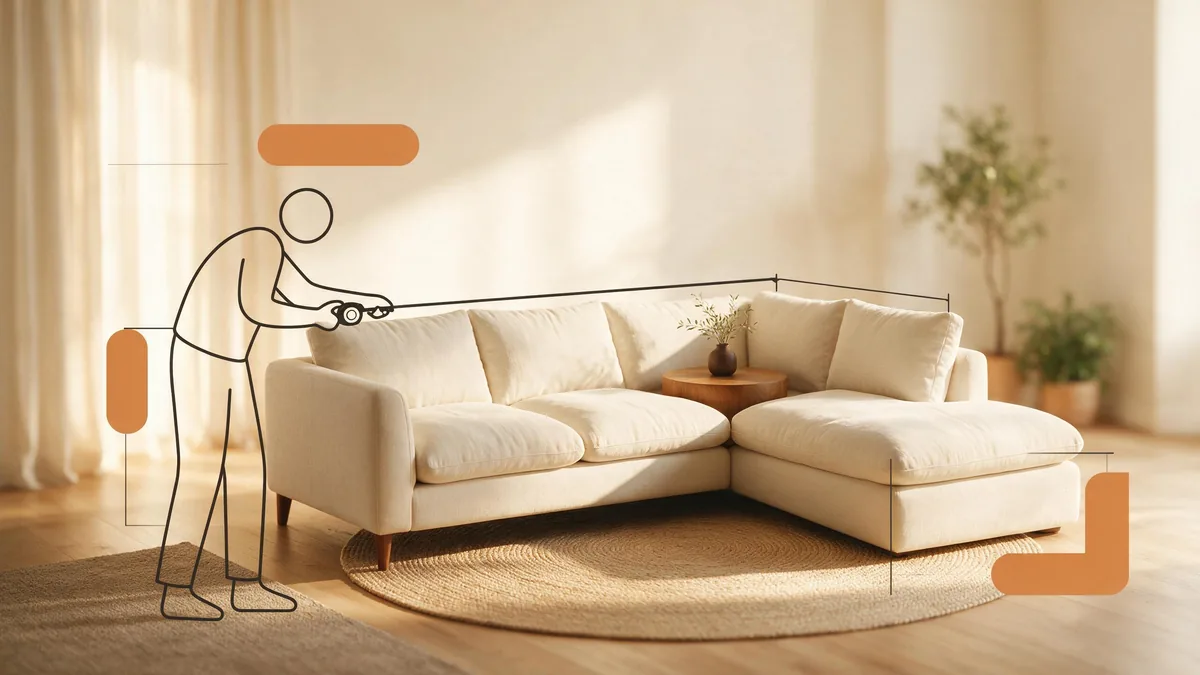
L-shape
Overall width, depth and the notch so it fits its corner.
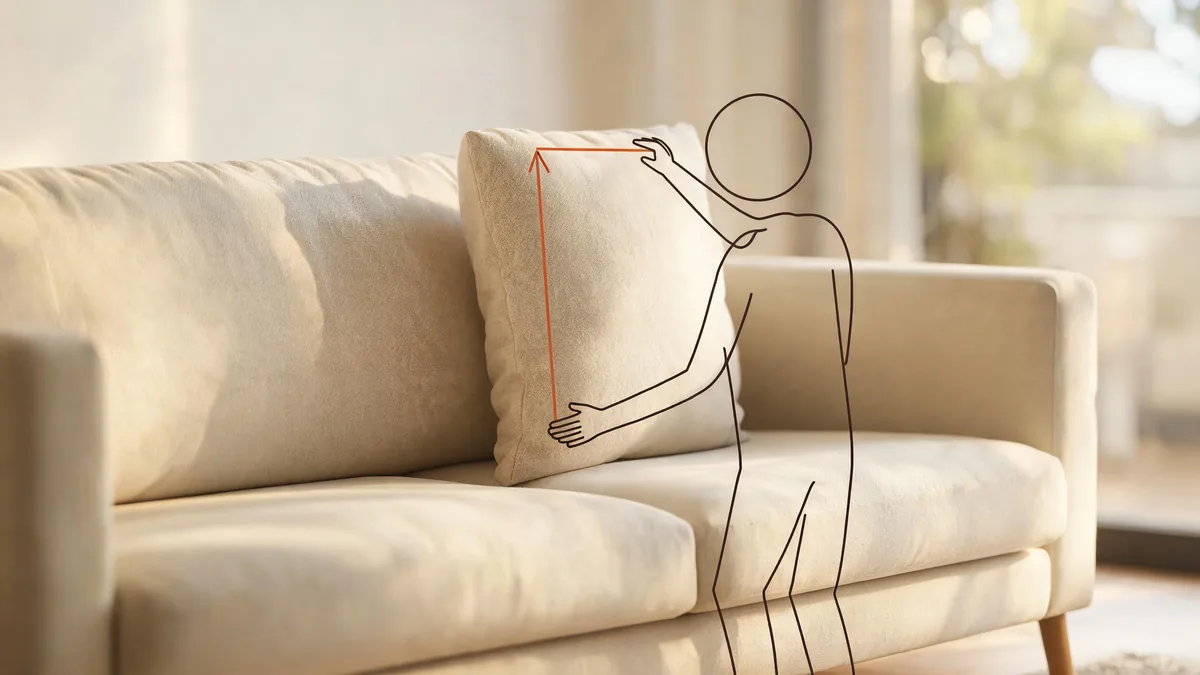
Back Cushion
Width and height matter most; thickness is what you sit against.
Common Mistakes to Avoid
These are the ones we see most.
Measuring the foam, not the cover
Foam sags and gives an unreliable number. Always measure the cover seam to seam.
Measuring over the piping
That adds centimetres and makes the cover too loose. Measure between the piping.
Measuring a curved cushion at the middle
Measure at the widest flat point to stay accurate.
Forgetting thickness
Thickness is essential — three numbers, not two.
Rounding too much
Give us the most precise number you can — we handle the seam allowance.
Questions
Straight answers.
What if my cushion is an odd shape?
No problem — our designer supports rectangles, circles, triangles, L-shapes and more. For an irregular shape, choose Template and we'll guide you.
How much tolerance do you build in?
We cut to your seam-to-seam measurements, so the cover fits snugly. Soft covers compress — bigger is always safer.
Do I need to measure to the nearest millimetre?
As close as you can. A few millimetres won't hurt, but exact is best.
What thickness should I choose?
If your cushion is under 500mm deep, stay under 75mm thick. Keep the finished height under 550mm so your feet still touch the floor. Deep daybed? Go 100mm+.
Can I get a fabric sample first?
Yes — free fabric samples are shipped to your door, so you can feel the fabric before you order.
I'm still not sure — can you help?
Absolutely. Send us a photo and we'll help you measure and even preview your fabric. This isn't rocket science — we're here.
Got your measurements?
Pick your shape and fabric, and we'll cut & sew a cover that fits perfectly.
Start Customising